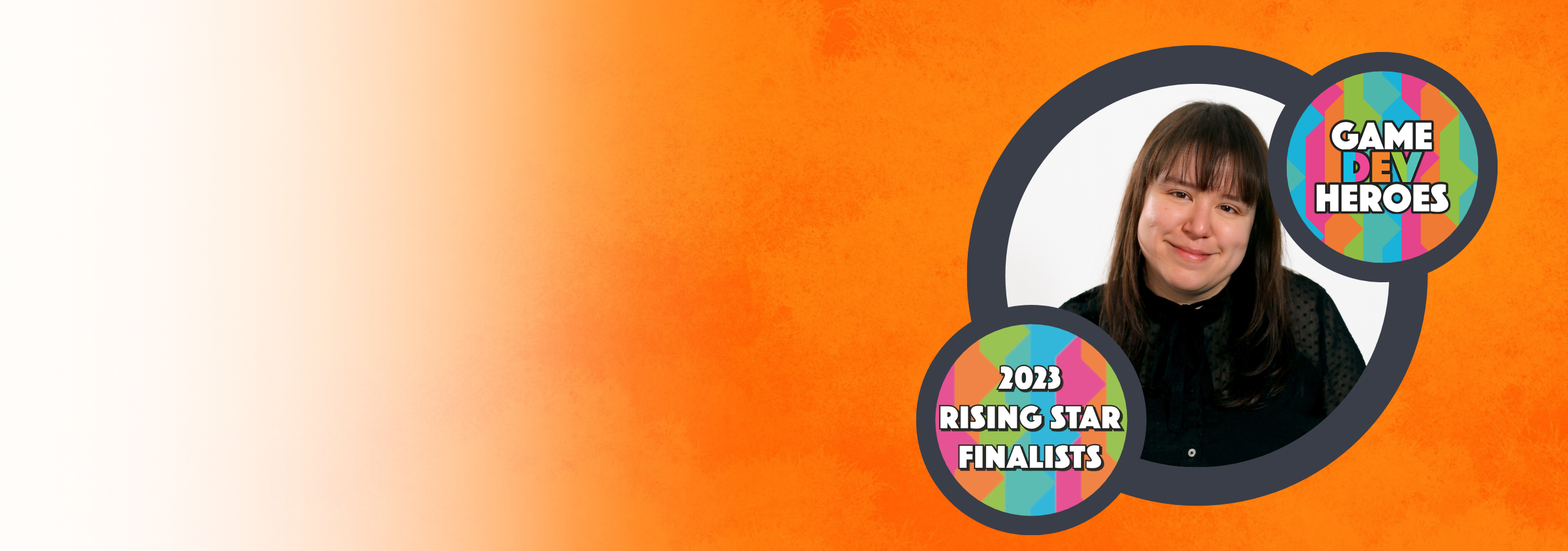
Carina Soares shortlisted as Game Dev Heroes Rising Star

Carina Soares shortlisted as Game Dev Heroes Rising Star

8th

June 2023

Awards

The shortlist for the 6th annual Game Dev Heroes
Awards has been announced, and we’re delighted to share that our Lab42
Environment Artist, Carina Soares, is a finalist in the Rising Star category.

Game Dev Heroes is an annual awards event that takes place
during Develop: Brighton. While most games industry awards celebrate studios
and games, the Game Dev Heroes celebrate individuals working within the games
industry, who have been nominated by their peers for their skills and
achievements.

The Rising Star Award is for individuals who have recently
entered the games industry and has made a noticeable impact on their colleagues
and studio.

“We’re all very proud to have Carina
shortlisted for this award,” says Lee Piper, Art Director at Lab42 Games, “for
someone who’s been in the games industry for such a short amount of time,
Carina has continually impressed us. She has shown herself to be not only an
extremely talented and versatile artist, but also a true collaborator who
diligently supports her team and rises to every challenge with infectious
positivity.”

The
winners of the Game Dev Heroes Awards will be announced at a celebratory event
on the evening of 11th July 2023

Kirsty Kirby shortlisted as Diversity Star

Kirsty Kirby shortlisted as Diversity Star

18th

May 2023

Awards

The shortlist for the 2023 Develop: Star Awards has been announced,
with Lab42’s Studio Operations and Engagement Manager, Kirsty Kirby, being
named as a finalist for the Diversity Star Award.

The Develop: Star Awards is an annual event that recognises the
best talent in the games industry, with the Diversity Star Award celebrating
individuals who have shown a commitment to promoting diversity and inclusivity.
Specifically, the judges look for trailblazers who go above and beyond to
further the cause of diversity within the games industry.

“We’re all so proud to have
Kirsty shortlisted for such a prestigious award,” says Terry Goodwin, Lab42
Studio Director, “it’s a testament to how hard she works to make Lab42 such a
great place to be, and her dedication to having a positive impact on the games
industry as a whole. All of the finalists are doing amazing things, and we’re
thrilled to have Kirsty recognised among them!”

Earlier this year, Kirsty’s work was also recognised when she was
named a GI:Biz Game Changer. We’re all very proud to be working alongside Kirsty as she continues her commitment
to making the games industry a more inclusive space where everyone can enjoy a
flourishing career.

The winners of the Develop: Star awards will be
announced at a celebratory event on Wednesday 12th July 2023. Best
of luck to all of the very deserving finalists!

How to become a Games Artist with Lee Piper

How to become a Games Artist with Lee Piper

4th

May 2023

Culture

Since joining Lab42 as Art Director in 2021, Lee has successfully grown the team from just 7 people to 21, with most of that growth taking place through 2022. Tripling the size of the team in just over a year, Lee has welcomed industry veterans and new talent alike. Knowing that the games industry can be one of the hardest to break into, especially for artists, Lee shares his insights into how to land your first games job.

Do you need a degree to be a games artist?

While a degree can be useful, it is not essential to becoming a games artist, as long as you have a strong portfolio.

“From indie to large studios there are several opportunities for people from all backgrounds to get a foot in the games industry and make a living doing something they love,” says Lee, who has worked at a variety of studios over his time in the games industry. 

Many people looking to get into the games industry set their sights on the bigger, well-known AAA studios, but Lee believes it’s worth casting your net a little wider, especially if you’re still honing your skills as an artist. 

“I might be biased, but I believe it is worth applying to smaller studios as well as the ‘big name’ studios. In my experience smaller to mid-size studios tend to be more personal and let you find your niche – you get more input into the art you are creating which is something we all care about as artists.” 

Build your portfolio

The most important aspect of your application is your portfolio. Use it to showcase your best work but keep it concise. 

“Initially, we look for talent and skill in the appropriate discipline, usually demonstrated in a portfolio or showreel – this is what will get a candidate the invitation to interview.” 

This is especially true when the team are looking to recruit niche specialisms. 

“When I started at Lab42, the existing team were doing a great job servicing the art requirements at the studio – covering everything from concept to character art. However, as the games we make get more complex and larger in scope, we decided hiring more discipline specialists rather than generalists would be the way to go.” 

At interview: what to expect 

“At interview the candidate’s passion for the work, knowledge, and how they will work with the art team and wider studio is evaluated” 

Lab42 take great care to ensure everyone who joins the team is a good cultural fit, but this doesn’t mean that you have to force yourself to be outgoing or extroverted; it’s more about communication styles and the drive to do your best work. 

“We look at how the candidate will add skills to the team, gain new knowledge, take and give feedback and grow in their time at the studio – this is all is very important to us,” says Lee, “We expect juniors to have talent and passion to learn, but little experience. People new to the industry shouldn’t be too worried about a lack of experience if they have the art skills.”

Ask for feedback 

Even if you don’t get offered the job, the process is still a valuable learning experience. 

“I would say to any aspiring artists reading, don’t be disheartened by rejection. Ask for feedback if you feel an interview went well but you were not offered the position. Act on the feedback if it’s constructive and makes sense to how you want to improve, or how you see your career going.” 

And it’s not just potential employers who can give valuable feedback.  

“If you are not getting interviews, get peers to review your work. Approach people in the industry and ask for feedback – a few people (not everyone – you may get ignored!) will be happy to look and give you some pointers. Again, act on feedback if it makes sense for you. If someone takes the time to give you feedback do acknowledge it or thank them, you never know when you might bump into them again!” 

“Rejection will not always be about the quality of your work or how you come across at interview – some positions could be looking at very specific skills in specific software or using specific techniques, again it’s good to get feedback – you may have a skill gap to work on for the position you want.” 

…and keep on learning 

Whatever your level of formal education, continuous learning is a key part of being a good game developer. The tools and methods used to make games art are continuously evolving, so developing an aptitude for self-directed learning can really set you apart.   “I would say to anyone wanting to get into games, there are loads of tools and lots of information at your fingertips and best of all most of it is free!” says Lee, whose own team has regular knowledge-sharing sessions as well as dedicated learning days. “All you need is the talent, passion and drive to take advantage of what’s there.”  

Looking to get started? Here are some free resources to help you grow your skills: 

  If you’re looking to get your start in the video games industry, entry level positions are often available at Lab42 and Sumo Group. Check out our careers page to see if there’s a good fit for you.   
Meet our new Studio Director – Terry Goodwin!

Meet our new Studio Director – Terry Goodwin!

7th

March 2023

News

We’re so excited to introduce
our new
Studio Director, Terry Goodwin, who takes over from Ed Blincoe following five years as
Technical Director.

Bringing a wealth of experience
and technical expertise, Terry will continue to bring a passion for creating
great games and inclusive workspaces to the role as they take on this exciting
new challenge.

Terry joined the industry in 2008
as a programmer and has shipped more than 30 titles across all platforms.

On the role,
Terry said: “I’m
thrilled to have this opportunity to lead Lab42! It’s been amazing to see this
team grow from a handful of developers in our early days, to the incredible
80-strong team of passionate and talented people we have now.

“What is the most
important to me is that we preserve the unique culture and collaborative
practices that makes Lab42 a great place to work and a successful game
development studio.”

Terry takes over from former Studio Director Ed
Blincoe, who has found a new home at fellow Sumo Group business Secret Mode as
VP of Publishing. We wish him all the luck in his new endeavour and would like
to thank him for his many years of hard work, his love for the studio and its
teams and – of course – always paying for Pizza Fridays.

We’re so excited for Terry in
their new role and will be sharing more information about them in the coming
months. Watch this space!

It’s all happening here at
Lab42! Want to be a part of our journey? Why not discover all roles currently
available on our
Careers Page.

Lab42 Awarded ‘Best Places To Work’ for Third Consecutive Year

Lab42 Awarded 'Best Places To Work' for Third Consecutive Year

4th

August 2022

News

Culture

We’re delighted to share that Lab42 was awarded a win at the 2022 GI.Biz Best Places to Word Awards 

This is the third consecutive year that Lab42 has been awarded the prestigious award, which celebrates the best places to work in the UK games industry. 

We’re thrilled to win this award again,” says Terry Goodwin, Technical Director at Lab42 Games. “Everything our studio has achieved over the years has been thanks to our incredible team, so this award really means a lot to us.”

The criteria for winning this award includes an assessment of employer commitments (such as salary, holiday, benefits, social activity etc.) in addition to an anonymous employee survey which covers numerous topics, including work/life balance, management, diversity, working environment and much more. 

“The employee survey is completely anonymous and makes up the majority of the score, so this awards process gives us valuable insight into our team really feel about working here,” continues Terry, “It’s a reflection of the company culture we’ve built together, and I’d like to thank everyone at Lab42 for making our studio such an amazing place to work!”

If you would like to join our award-winning team and enjoy our fantastic studio culture, check out our careers page for current opportunities.

Beginning to look through the invisible lens: Let’s #RaiseTheGame

Beginning to look through the invisible lens: Let’s #RaiseTheGame

3rd

August 2022

Culture

Earlier this year, Lab42 Games made the pledge to #RaiseTheGame. 

#RaiseTheGame is an industry-wide initiative facilitated and managed by Ukie, aimed at driving change and meaningful improvement through equality, diversity and inclusion (EDI) work within the games industry. 

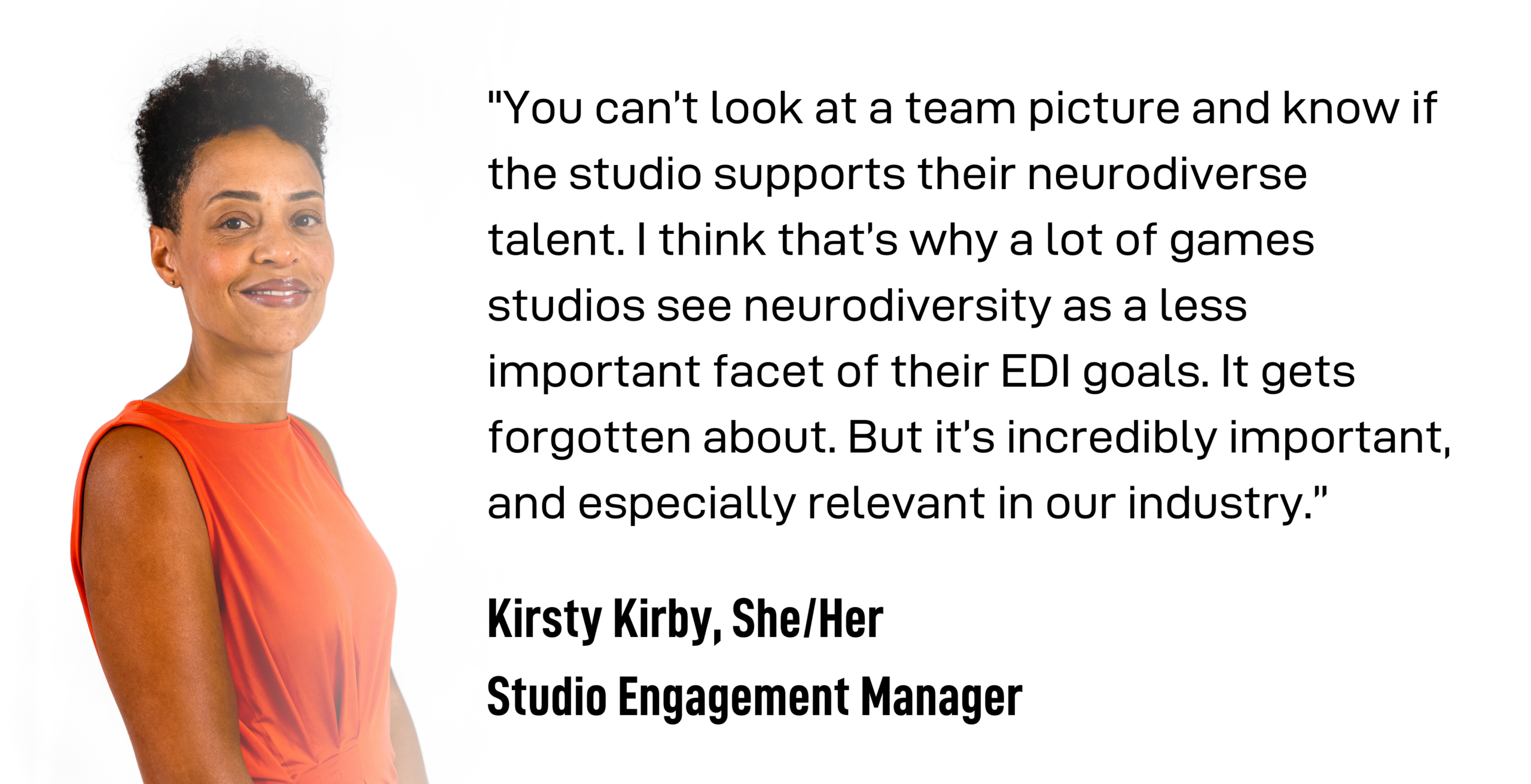
“We didn’t pledge to boast about the things we’re already doing, we joined the pledge because we want to be continuously improving.” says Kirsty K, Studio Engagement Manager, “and part of that is looking at our people, our studio, our culture and asking; ‘what can we do better?’” 

For Lab42, the 2022 games industry census was an eye-opener, with 10% of people within our industry reporting having ADHD and 4% of people reporting having autism – this is higher than the national average of 4% and 1-2% respectively.  People who reported that they are autistic also had the least positive overall attitudes towards the games industry in general, and the lowest opinion of how inappropriate behaviour is handled. 

While the UK Games Industry Census is an important source of information, Ukie EDI Coordinator Dom Shaw encourages everyone to aim beyond what the data shows. He believes that there is more neurodiversity within the industry than the current data shows, largely due to barriers in understanding and acknowledgement on a wider level. Simply put; building neurodiversity-friendly practices into your workplace culture could benefit people who may not even know they are neurodiverse. 

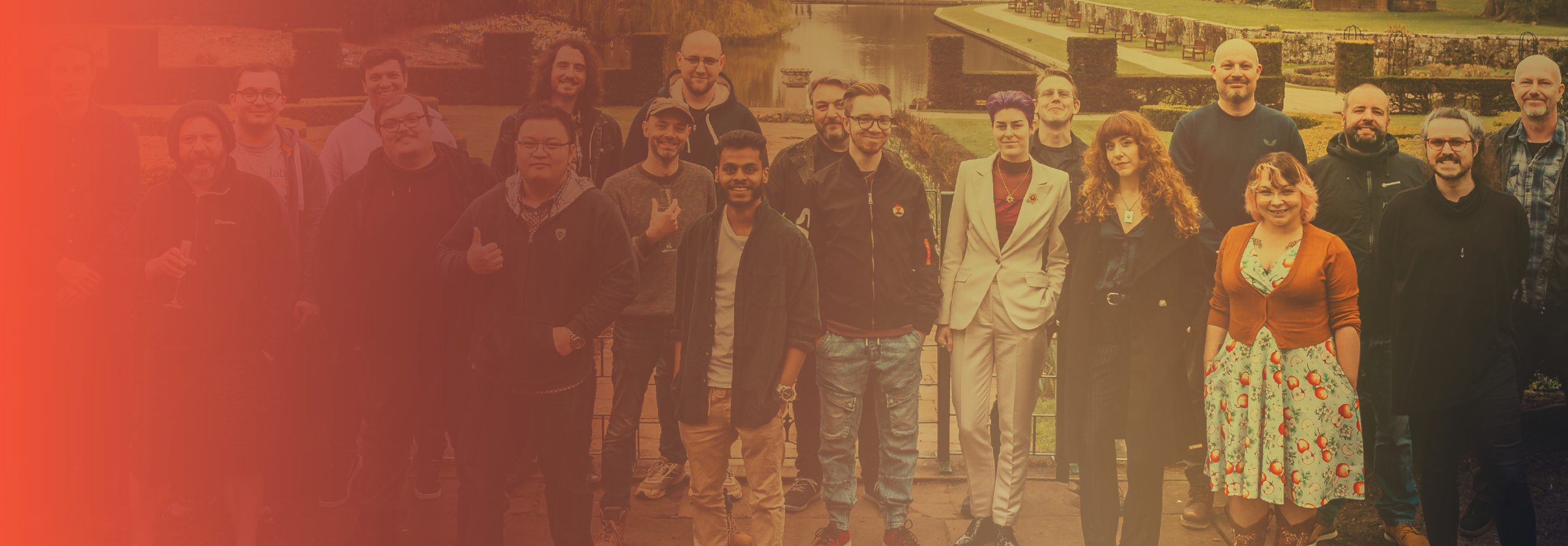
“This was important to us because it’s less visible,” says Kirsty, “we have a lot of focus on inclusivity when it comes to gender and race, which we’re proud of and it’s still very necessary – but you can’t look at a team picture and know if the studio supports their neurodiverse talent. I think that’s why a lot of games studios see neurodiversity as a less important facet of their EDI goals. It gets forgotten about. But it’s incredibly important, and especially relevant in our industry.” 

Handbooks and policies are all very well and good, but how do we make sure we’re really supporting everyone in their day-to-day role? 

The first step for Lab42 was partnering with SIC, who are experts when it comes to helping businesses improve their practices to become more inclusive.  

“Training on the topic of neurodiversity within your organisation –to develop confidence on every side and best practice- is important in creating an inclusive working environment,” says Rachael Mole, Founder and Managing Director of SIC, “Knowing how to manage, lead, inspire and ultimately retain great talent is vital, even more so in the gaming industry, which hires proportionally more neurodiverse staff.”  SIC helped us to deliver a Neurodiversity in the Workplace workshop to all our line managers and producers. The aims were to ensure that everyone in a leadership position would better understand the spectrum of neurodiversity, and learn what processes they could implement to better support their team. We explored case studies, as well as building a list of actionable changes we could make to our processes. 

“One of the things that really stuck with me was that some people can be neurodiverse and not even know it themselves,” says Technical Director, Terry G, “so we need to build inclusive, neurodiversity-friendly practices into our everyday work and apply it to our interactions with every person we work with.” 

“The important thing to remember is that it’s a journey,” says Kirsty, “you can’t just host one workshop and call it a day. We feel that with the help of SIC our understanding is increased, but we’re going to keep on working and make sure Lab42 is a place where everyone can feel comfortable, safe and supported.”